In some kind of fate twist, Evelyn Morris’s brainchild and rapidly expanding Melbourne institution Pikelet would never have existed had she not succumbed to the usual teenage angst and pressures of trying to be cool. Dreaming of a life as a concert pianist, Morris studied the instrument throughout her childhood only to turn to the drums in high school attempting to break away from the stifling constructs of classical music. From here she branched out, dabbling in varying media and styles from hip-hop to punk. It was in punk music that Morris found herself a home as drummer for local exponents Baseball and psych/punk brain melters True Radical Miracle, amongst numerous other collaborations including a spot in Japan’s Boredoms ‘Boadrums’ performance at last year’s International Arts Festival.
Pikelet is about as far removed from any of this as imaginable. With its inception very much a bedroom project, Morris as Pikelet weaves delicate beautiful textures through varying instrumentation and a loop pedal. Not so much raging against the frenetic aggression of her other musical couplings, Morris explains that Pikelet arose as a mechanism through which she could explore the more beautiful aspects of the world. “I’d tried everything,” she says. “What I found was that when I enjoyed [music] the most was when it was really hard and really fast so that’s how I ended up playing in punk bands. Then the Pikelet thing was just a big reaction to that cause I felt like there were other things I wanted to try that were kind of quiet and more melodic. I wanted to do more of a singer songwriter thing so I tried it using a looper. At the time I was going through some soul searching because my mum was sick so it was like a reaction to circumstances. It occurred to me that there was nothing I could do about it so there was no point being angry. It was more about finding a way to look for beauty in it and making something that was healing.”
Frustrated with the limitations of what could be achieved live with a loop pedal, Morris enlisted the services of a few friends to help out. Through the necessity of these unions, Pikelet has now become a bona-fide four piece. With a Soundclash grant allowing the band to recently engage in an intensive song writing period, Morris explains the forthcoming third album will be a markedly different beastie indeed. “It sounds more grown up or something,” she continues. “The right people came along, so it just made sense. They were the inspiration to get the band together, like the Blues Brothers or something. It wasn’t a calculated thing; it was [again] a reaction to circumstances. There was a lot missing from what I wanted to do live. When I recorded at home it was thick and layered with heaps going on and I couldn’t present that how I wanted to live so I thought it was time to get a band. It hasn’t been totally smooth but any creative process has some bumps in it. You have to navigate people’s ideas and different places that they come from, it’s been really interesting.”
Signed to Chapter Music upon presentation of Pikelet’s first demo, Morris credits the label’s creator Guy Blackman as a driving force in the continuation of the project over the years. Further to this she believes that it’s people such as Blackman that make Melbourne a great place to live and work as an artist. “If he hadn’t been around in terms of emotional support, I don’t know if Pikelet would be around anymore,” she adds. “In Melbourne there’re so many people doing so many different kinds of music that you never get caught up thinking yours is the most important. It gives you the freedom from your ego to explore your music without too much of a grandiose idea of what you want it to be.”
Tuesday, May 10, 2011

Monday, May 9, 2011
Mike Noga Interview
Mike Noga occupies a table at a North Fitzroy cafe and throws down a few mouthfuls of his lunch as one journalist exits the media sushi train and the next one moves in. He’s bright, welcoming, engaging—his eyes are a wild blue up close. Unphased by the press commitments of the day (though he does admit he’ll be having a proper drink pretty soon), Noga has a new solo record he’s excited to talk about. His enthusiasm about the projest is disarming.
Noga is best known as drummer for ballad-punk dynamos, and relentless tourers, The Drones, with whom he’s been playing for six years now. It’s been almost that long since Noga’s released a truly solo album—his last 2006’s Folk Songs—and this new record The Balladeer Hunter marks a dramatic leap forward in song writing and overall completeness of feel. Ten heartfelt songs weave a striking yet gentle and simply beautiful series of tales here—clearly the defining work of a man who’s output has been significant in all its forms thus far.
“I just always played music,” he says. “It always felt like the natural thing for me to do. I got into bands whan I was young and growing up in Hobart, which still produces heaps of great bands. I made the move [to Melbourne] when I hit eighteen and was always in bands and always writing songs.
“The major turning point was when I went and saw The Drones when they were nobodies, maybe at the Empress, and I was completely blown away. I didn’t know them at all but I ran into [Drones’ front man Gareth Liddiard] Gaz at a pub a couple of weeks later, introduced myself and just said ‘even though you don’t know me if you ever need a drummer, if your current drummer quits or anything happens, you have to call me’. He said, ‘Ok deal’, and we shook hands. It’s quite a romantic story and when we talk about it now we remember lookin’ each other in the eyes and thinkin’ I wanna be in that band.”
It was three years before the phone call arrived. When it did, Liddiard asked Noga if he’d be able to pack his bag for Europe for a six-month tour. “I had to quit my job and take a leap of faith,” Noga continues. “I’d seen [The Drones] a lot in those three years I didn’t talk to Gaz, and thought fuck these guys are mind blowing. So I took that leap of faith and that was six years ago.
“I’ve been really fortunate in the last five years that I’ve been able to live off music. It’s not easy, it can be a huge sacrifice. I’m broke, put it that way. I don’t have life insurance or any of that kind of stuff. Still there was never any question of a different career, it’s just always what I’ve done and felt like it’s what I really want to do.”
The Drones’ story is one of great successes in terms of industry/peer recognition and international following, but the nature of the music business these days dictates that the touring band will prosper, so tour they did. For Noga, however, the road is not conducive to the writing of his own music. So arrives the double-edged reality of ‘making it’ in music not necessarily being the ideal creative environment even if it does facilitate survival.
“We’re lucky that with The Drones that we can tour and make some money,” he continues. “We can go overseas and survive and we’ve got enough profile now that we can come back with money in our pockets which is nice. But in times like this when The Drones aren’t playing and the money starts to drop off, I sometimes wonder what I’m doing?
“Touring’s really hard on relationships. I’ve just gotten back from five weeks in Europe opening up for Band Of Horses, which was amazing. Even though five weeks doesn’t sound that long, it can be really tough on a relationship. It’s hard. There’ve been quite a few moments over the last few years where I’ve gone ‘fuck it, I’ve had enough, I’m not playing music ever again, I’m bowing out, I’m done’.”
The recent Band Of Horses support tour came as a pleasant side-effect of friendships forged on a Drones tour with the same band some years back. The trip gave Noga the chance to play his brand new material to large crowds in Europe and, he claims, gave him the re-invigoration of spirit he was looking for.
“You move into a phase like this one where I’ve just done this record that I’m really proud of,” he continues, “and I’m filled with a new sense of vigour, ready to go and all excited about music and about playing live again. I’d never played this stuff live with a band before but [Band Of Horses’ singer] Ben invited me over to go on this tour and support them. They’re in a position no where they’re that big that they can pick and choose who they want. They could have taken Will Oldman or whoever they wanted, so I said sure, I’ll come over and play this new record of mine.
“The first gig was is Lisbon and we stepped out on stage to play these songs for the first time to 3000 people in this theatre screaming and cheering. From there it just grew and grew and in the end we were playoing these huge theatres, all sold out. It was incredible, a dream come true. We just got back the other day, it’s a bit hard to adjust to reality. You get home and you miss playing in front of 3000 people every night and feeling like a rock star. Now I’m sitting at home watching Two and a Half Men.”
With Gareth Liddiard’s solo project Strange Tourist still warming record-store shelves, there will be inevitible parallels drawn between the two works. Really, when you explore the two records, the tendency towards balladry is where any comparison begins and ends. “It certainly raised the bar that’s for sure,” Noga says of Liddiard’s influence on his song writing. “I just look at all my friends and go ‘fuck they’re all so talented’. If there’s any influence from them it’s been just to work harder to try and get up to their standards. It’s a pleasure to play with these people every night, to hear these amzing lyrics and songs. It makes me want to keep chipping away at it and get better and better.
“I don’t treat this as a side projsct or a one off, like the drummer from The Drones has done a record. I’ve been doing this for a long time.” In fact, he tells me, the bulk of the material for The Balladeer Hunter had been in the works for over a year before he recorded it. “For a lot of people this may be the first album of mine that will come into their vision. For a lot of people this will be their first taste of me... that sounds disgusting. It isn’t something I take lightly.”
Noga is best known as drummer for ballad-punk dynamos, and relentless tourers, The Drones, with whom he’s been playing for six years now. It’s been almost that long since Noga’s released a truly solo album—his last 2006’s Folk Songs—and this new record The Balladeer Hunter marks a dramatic leap forward in song writing and overall completeness of feel. Ten heartfelt songs weave a striking yet gentle and simply beautiful series of tales here—clearly the defining work of a man who’s output has been significant in all its forms thus far.
“I just always played music,” he says. “It always felt like the natural thing for me to do. I got into bands whan I was young and growing up in Hobart, which still produces heaps of great bands. I made the move [to Melbourne] when I hit eighteen and was always in bands and always writing songs.
“The major turning point was when I went and saw The Drones when they were nobodies, maybe at the Empress, and I was completely blown away. I didn’t know them at all but I ran into [Drones’ front man Gareth Liddiard] Gaz at a pub a couple of weeks later, introduced myself and just said ‘even though you don’t know me if you ever need a drummer, if your current drummer quits or anything happens, you have to call me’. He said, ‘Ok deal’, and we shook hands. It’s quite a romantic story and when we talk about it now we remember lookin’ each other in the eyes and thinkin’ I wanna be in that band.”
It was three years before the phone call arrived. When it did, Liddiard asked Noga if he’d be able to pack his bag for Europe for a six-month tour. “I had to quit my job and take a leap of faith,” Noga continues. “I’d seen [The Drones] a lot in those three years I didn’t talk to Gaz, and thought fuck these guys are mind blowing. So I took that leap of faith and that was six years ago.
“I’ve been really fortunate in the last five years that I’ve been able to live off music. It’s not easy, it can be a huge sacrifice. I’m broke, put it that way. I don’t have life insurance or any of that kind of stuff. Still there was never any question of a different career, it’s just always what I’ve done and felt like it’s what I really want to do.”
The Drones’ story is one of great successes in terms of industry/peer recognition and international following, but the nature of the music business these days dictates that the touring band will prosper, so tour they did. For Noga, however, the road is not conducive to the writing of his own music. So arrives the double-edged reality of ‘making it’ in music not necessarily being the ideal creative environment even if it does facilitate survival.
“We’re lucky that with The Drones that we can tour and make some money,” he continues. “We can go overseas and survive and we’ve got enough profile now that we can come back with money in our pockets which is nice. But in times like this when The Drones aren’t playing and the money starts to drop off, I sometimes wonder what I’m doing?
“Touring’s really hard on relationships. I’ve just gotten back from five weeks in Europe opening up for Band Of Horses, which was amazing. Even though five weeks doesn’t sound that long, it can be really tough on a relationship. It’s hard. There’ve been quite a few moments over the last few years where I’ve gone ‘fuck it, I’ve had enough, I’m not playing music ever again, I’m bowing out, I’m done’.”
The recent Band Of Horses support tour came as a pleasant side-effect of friendships forged on a Drones tour with the same band some years back. The trip gave Noga the chance to play his brand new material to large crowds in Europe and, he claims, gave him the re-invigoration of spirit he was looking for.
“You move into a phase like this one where I’ve just done this record that I’m really proud of,” he continues, “and I’m filled with a new sense of vigour, ready to go and all excited about music and about playing live again. I’d never played this stuff live with a band before but [Band Of Horses’ singer] Ben invited me over to go on this tour and support them. They’re in a position no where they’re that big that they can pick and choose who they want. They could have taken Will Oldman or whoever they wanted, so I said sure, I’ll come over and play this new record of mine.
“The first gig was is Lisbon and we stepped out on stage to play these songs for the first time to 3000 people in this theatre screaming and cheering. From there it just grew and grew and in the end we were playoing these huge theatres, all sold out. It was incredible, a dream come true. We just got back the other day, it’s a bit hard to adjust to reality. You get home and you miss playing in front of 3000 people every night and feeling like a rock star. Now I’m sitting at home watching Two and a Half Men.”
With Gareth Liddiard’s solo project Strange Tourist still warming record-store shelves, there will be inevitible parallels drawn between the two works. Really, when you explore the two records, the tendency towards balladry is where any comparison begins and ends. “It certainly raised the bar that’s for sure,” Noga says of Liddiard’s influence on his song writing. “I just look at all my friends and go ‘fuck they’re all so talented’. If there’s any influence from them it’s been just to work harder to try and get up to their standards. It’s a pleasure to play with these people every night, to hear these amzing lyrics and songs. It makes me want to keep chipping away at it and get better and better.
“I don’t treat this as a side projsct or a one off, like the drummer from The Drones has done a record. I’ve been doing this for a long time.” In fact, he tells me, the bulk of the material for The Balladeer Hunter had been in the works for over a year before he recorded it. “For a lot of people this may be the first album of mine that will come into their vision. For a lot of people this will be their first taste of me... that sounds disgusting. It isn’t something I take lightly.”
Tuesday, April 12, 2011
DIGITAL RADIO FOR COMMUNITY STATIONS

This Thursday morning at 11am, nine Melbourne metropolitan community radio stations will simulcast, live from Federation Square, for the first time on a digital platform. In Adelaide the following day six stations will be launched onto the digital grid and over the coming months capital city community stations will join them with a regional roll out to come in the near future. Unlike the planned phase-out of analogue television to make way for a purely digital platform, digital radio will be offered as a supplement to current analogue services, which will include text and graphics and allow increased broadcast quality and reach.
These events mark the Community Broadcasting Association of Australia’s successful negotiation of the legal and political minefield that has been the lobbying process. As Australia’s largest media sector (over 350 long-term stations facilitated by around 23,000 volunteers) it was imperative that community broadcasting found its place in the digital realm. In an acronym and jargon-laden process that has taken over a decade to complete, CBAA President and Melbourne metro station PBS Manager Adrian Basso admits there were times when he wondered whether this moment would come.
“I’ve been working in community radio for about 12 years now and even back then there was talk of digital radio,” Basso says, “so it’s nice to get to a stage of actual realisation. Years ago when we were meeting and looking at all the legislation and wondering whether there would be funding or no funding, we were looking at a lot of heavy documentation like contracts and ACCC [Australian Competition and Consumer Commission] deliberations—a minefield of stuff. So to be finally here makes it very rewarding.”
In a broad sense, digital radio is a good match for community broadcasting as it enables an increase of potential output by extending services beyond the time and space limitations of the analogue spectrum. Basically stations will be able to squeeze more of whatever it is they do into the same day and extend their content to a far greater listenership. Where commercial stations will invariably use any technological advancement for the increase of advertising revenue, community radio will actually reap the benefits of pushing programme development and creating new methods of information delivery.
“Whatever platform for media is available it’s critical that it’s accessible and that it allows people to participate and that it’s not just the preserve of commercial interests, or just part of the massive ABC empire,” says Radio Adelaide General Manager Deb Walsh. “There’s a different type of media and range of content that’s produced when people get in there and do it themselves and it can’t be created by other models; it only comes out of the environment where people come in and determine the content themselves.”
There is a commonality of interest in the community broadcasting sector that bonds the dramatically divergent continuum of stations together. Whether using the medium for religious programming, rural information or speciality music, news, information or foreign language shows, the key is communication. Regardless of who you are and what you have to say, community radio allows you to do so in an environment free of the influence of government and the advertising dollar.
Melbourne’s nine and Adelaide’s six metro stations joining forces for the launches will be a public show of solidarity and celebration of the diversity of voice within the sector. Associations between community stations are nothing new, Basso explains, and the realisation of these years of hard work to get community radio up on the digital grid is a huge step in ensuring the continuation of relevant independent voice.
“Simulcasting the nine metro stations is our official way of celebrating the digital launch in a unique way,” says Basso of the Melbourne launch. “The launch itself is a strong indication of the community stations being very collaborative and if you combine the nine stations’ audiences it will be very potent in terms of impact. It’s a strong acknowledgement that we are an important part of the community and that we do say things and talk about things that other broadcasters don’t and won’t and never will.”
The Adelaide launch in the city’s Central Market differs in that will see the six metro stations set up in a circle yet broadcasting separately. There will be doughnuts in the shape of ‘0’s and ‘1’s being handed out by ‘servers’ who will be offering the public a ‘byte’. “We’ve got the corny angle covered,” says Walsh.
In terms of ‘real life’ plans for new services, community radio sits in a unique position in that stations can freely explore new and exciting ways to integrate text and graphics into their information delivery without the burden of having to sell anything. Though initially much of the content available on digital radio will simply match the current content, Basso is excited about the realm of possibilities for new services and believes community radio will lead the charge in terms of finding exciting and innovative ways to make use of the medium. “We’ve always been embracing of new technology and innovative approaches,” he says. “I’m sure each station will do it a little bit differently, [but] the sector’s really used to squeezing as much from as little as possible.”
“We’ve seen it with commercial radio so far that such is the extent of the advertising that the entire radio station becomes an advertisement,” continues Walsh, “they’ve come up with that exciting new model. We’re interested in doing something that on a platform level is very different. What we’re thinking about are different ways of communicating or different uses of radio that aren’t in the set of standard formats that exist on radio. We’re interested in a bit of a reinvention of the medium to take advantage of some of the fantastic advantages of radio like it being free, being inclusive of everybody and being something you can listen to while you’re doing something else. They’re the great advantages that radio has over other media.”
Samson McDougall
Sunday, April 10, 2011
Those Darlins

Screws Get Loose
Spunk
Every now and again there’s a song so feakin’ catchy and brattish and wrong that you can’t stop listening to it in spite of yourself. The title track from Those Darlins’ second record Screws Get Loose is one of these numbers. A wobbly three-chord jangle sets the scene for some vocals so skewed in terms of tonelessness and (lack of) lyrical coherence that you can’t help but fall in love from the first listen. Can’t blame me for what I choose/Screws get loose. Can’t change me after all the abuse/Screws get loose. Can’t blame me for who I use/Screws get loose... genius.
If you had the opportunity to catch them at their recent Meredith or associated shows, chances are you would’ve fallen in love with them already as, undoubtedly, the Darlin sisters Jessi, Nikki and Kelley are the hottest Tennessee spunks in rock’n’roll today. And they fuckin’ know how to bring it. The only thing that sucked about their Meredith slot was, in a stroke of programming moronicism, the festival had them playing virtually last thing on the Sunday while most punters were licking their wounds and stuffing their soiled camp gear into busted bags.
While Screws Get Loose fails to bring the wild abandon of a Those Darlins live show, it acts as a fair taster and doubles as a great driving record. There’s enough variation of tempo from number to number—from $’s warped shadowy school-yard taunt-i-ness to Fatty Needs A Fix’s Ramones-like bounce. The obvious comparison here is with Atlanta’s Black Lips, and you’d have to say at this stage the boys have the edge. But, damn it, if Those Darlins are capable of the song-writing brilliance of the title track here, who knows what infectious delights they’ll bring us in the future.
Samson McDougall
Thursday, March 31, 2011
Cuba is Japan—interview with Cameron Potts

Cuba Is Japan is a band with a clear focus. “I had this idea of forming a band that would write about explorations,” says founding member Cameron Potts (also of Baseball and Ninetynine fame). “I’ve always been fascinated by them so I wanted to do a band that only did records about certain events in history.”
The band’s name (somewhat less predicably than the glut of other Australian bands with foreign place names in their titles) stems from Columbus’s first voyage upon which he reputedly mistook the land mass of Cuba for Japan. At the time there was no concept (in Europe) of the Americas or the Pacific and it was widely believed that Japan lay at the Eastern tip of the earth.
Their debut 7” is a beautiful thing. Comprising two ‘scenes’ from their forthcoming concept album about the great Portuguese explorer Ferdinand Magellan’s first circumnavigation of the globe in 1522, the package features a hand-knitted sleeve guard by Otto & Spike and beautiful artwork by Dylan Martorell screen-printed on boy’s school shirt fabric by Brisbane’s Matt Deasy. To cast your eyes on the thing is to need it. The run is limited (for obvious reasons) to 300 and will be available from the launch on April Fools’ Day.
“CDs are so redundant now,” continues Potts, purring and stroking the packaging of their own vinyl release. “I’m in a label [Alpine Areas] with a few other people that are into doing interesting releases—things that are really unique. With the miserable nature of downloads I think people these days appreciate something that’s a bit of a gift. We’re thinking about maybe a Pets With Pets [release] with Lego covers. A lot of bands are really keen to get on board.”
The 7” acts as a little taste test teaser for the group’s aforementioned forthcoming album Canvas, which judging by Potts’s enthusiasm will eclipse even the single in gorgeousness. “It’s a double album which will open out like sails of a ship and will be made of real sails,” continues Potts, eyes crazed with excitement. “There’ll be a Pacific side and an Atlantic side—all the stories broken up with intermissions, it’s gotta be done right.”
In line with the uniqueness of the sleeve design and artwork, Potts explains that Cuba Is Japan adopted a fresh approach to writing the album, which will be out in September. “We all researched it together [but] we all wrote songs separately, chapter by chapter in chronological order—like from go to whoa; leaving Spain to coming back. We all had a part in assessing it in our own way and bringing it all together as a band. Some of us just took sections, like I took the Pacific and Darcy [Pimblett] the Atlantic. We all had our own bits.”
Their music consists of soaring arrangements of violin, guitar, bass and keys. I wondered whether the grandiosity of the task they set themselves limited the arrangements to the bleak and murderous subject matter they were tackling? On the contrary, Potts says, Magellan’s journey—while tragic in its outcome, with a three-ship fleet of 227 men reduced to a dying crew of 19 upon return to Spain—produced many instances of triumph and wonder.
“There’s a lot of joy there,” he continues. “Like when Magellan found the strait that no one thought existed through to the Pacific, right down the tip of South America. They were six-months out and the crew just wanted to go home but he believed all that time that there had to be a pass and it almost sent his crew mad. Also when they first hit the Philippines after sailing the Pacific for four months, it was like the meeting of a first culture that would never happen again. It’s such a great canvas. If you give yourself a story, you can really stretch your musical abilities.”
Samson McDougall
Thrones—Q&A with Joe Preston
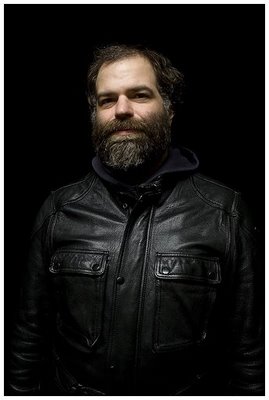
There are musicians that rise to fame, take the money and vanish into the ether. Other’s crash into the median barrier and burn in a blistering ball of self ruin. Then there are those who grind it out, hammer away at the brittle coalface of rock’n’roll, carve out a niche for themselves and graft out new and interesting pathways for other pioneering spirits to explore. Joe Preston is one of these musicians, a man who in certain circles is revered as a trailblazer, a groundbreaker; but chances are you wouldn’t recognise him if he turned up asleep on your doorjamb.
For many, Preston’s solo outlet Thrones is the stuff from which nightmares are made. A slightly confronting collision of bass, vocal punishment and looping zaps and booms, it’s not children’s birthday party music—or party music at all. But for those who paid attention to the likes of Melvins, Sun))), Earth or High On Fire (for all of which Preston has played), the Thrones tour this April represents a rare opportunity to see a true innovator at work.
Are you writing music right now? If so, as Thrones, or with whom? What (if any) Joe Preston releases can we expect in the near future?
JP: I operate at a glacial pace as far as writing and recording goes, but I do in fact have some new things coming out. I finally decided to put out my own records, and there is a split 12" with a Washington band called Sedan coming out very soon. I hoped to have them in time for this tour but the test pressings just arrived on Monday, so it will be another month. I'm also extremely disorganised, so distributing is the next hurdle, but hopefully by the time they are finished I will have my website up and I'll be selling them through mail order as well as at shows. I'm planning on putting out another 12" in the next year (hopefully this one), some cassette releases, and then re-issues of the first couple Thrones records on vinyl. High hopes for a man who can barely remember to leave the house wearing pants.
Given that you’ve been playing music for twenty-odd years now—and that those twenty years have seen dramatic changes in the landscapes of the music industry and media/communications in general—how do you feel about the state of modern music?
JP: Honestly, I'm a bit of a curmudgeon and don't listen to very much new music, and consequently don't keep up much with the state of modern music. To my eyes, it seems that even with all the changes in industry/distribution, ease of manufacture and creation, it's still just as trend driven as it ever has been. So I'd say the state of modern music is poor. But then again, there's no accounting for taste.
Do you think it’s easier to reach a wider audience today, or does the sheer volume of crap available online render good music more difficult to find?
JP: There's definitely a "wealth" of music being made these days, and it can be hard to wade through, but if someone is motivated to look around a bit, it's become so simple to have your music discovered by new people. I think the internet and its myriad sub networks are a great thing for someone who wants to make music but doesn't want to play the humiliating game of "trying to make it", that six degrees of separation theory really opens up fast as people communicate with each other almost immediately nowadays.
In terms of the changes that have occurred in the last decade or so (i.e. file sharing returning the focus to live, touring musicians rather than spinning dollars from album sales; the advent of sites such as MySpace allowing musicians to reach an audience regardless of major label profile etc.) what are the major benefits/drawbacks in your perspective?
JP: I like that file sharing has rendered major labels and their elitism (somewhat) impotent. I don't like that file sharing leads people to not bother paying musicians for their hard work. [It’s] a double edged sword for sure. I really like how quickly people devised ways to sell their music directly to fans without dealing with middlemen, or at least a few less of them. Conversely, there are lots of new middlemen ready to take a chunk out of a musician's cut by making it "easier" to get their music to a wide audience by encouraging them to use their sites, so it would seem labels are back with a change of clothes. For me, I have always sold more records in person at shows than I did through labels, so the changes don't affect me very much as I still tour regularly.
As a radio host on KMBT, you obviously embrace the independence of voice that community/public radio allows. What roles do you think radio, both independent and commercial, play in today’s music world?
JP: That's a tough one, here in the US radio is dominated, and I mean DOMINATED by corporate interests, so the closer you are to a population centre the less likely you are to hear anything on the radio that is not solely a vehicle for ads and profit. Our only national non corporate radio (NPR) is in grave danger of having their funding crippled. Internet radio seems to have stepped in and given a voice to a huge variety of tastes and opinions, which to me is wonderful whether or not the content agrees with me. I think saying "what the hell was that?" is a good thing when it comes to radio. My personal favourite radio stations are farm reports from the more desolate parts of the American mid-west; it is community reporting at its most basic and strange.
With the arrival of bands like The Sword and Mastodon it seems as though there’s been a resurgence of attention to the heavier outfits of the ‘80s and ‘90s (notably the sludgier stuff: Melvins, Acid King etc.). Is there much evidence of this in the US?
JP: I guess so, I definitely noticed more people into what I was doing in Thrones after I finished playing in High On Fire, and I don't think it was solely because I had been playing bass for a more popular band for a couple years. People often cite their influences, and the trails are easier than ever to follow back.
Whether as Thrones or as a member of the various bands you’ve played in over the years, your music retains a trueness of substance—you have not bent to accommodate radio air time or ever bowed to commercial pressures. Do you see this a lot in your musical circles? Who else are you inspired by in terms of a total reluctance to succumb to fashion or popularity?
JP: Thanks, that's sweet of you to say. I suppose I do see that in my circles, probably because I connect with people with a similar love of being themselves. Nothing inspires me more than seeing someone doing what they love to do, and obviously doing it for themselves. Lemmy comes to mind.
Samson McDougall
Tuesday, March 29, 2011
Mike Noga

The Balladeer Hunter
Other Tongues
In recent interviews Mike Noga has made it clear that his latest solo effort The Balladeer Hunter need not be considered merely a side project by that drummer from The Drones. It would be easy to brush those kinds of comments off as pure rhetoric or egotism, and as a writer there’s always that twang of apprehension as you give that new record from a musician you admire its first spin. Is this going to suck?, you think. What will I say if it stinks? Thankfully this record shines from the first listen and in all its bleak loveliness does nothing but secure Noga’s song writing abilities as some of the best around.
The opening crisply plucked guitar and stomp box simplicity of the much rotated community radio darling M’Belle sets the landscape of this recording beautifully. The world Noga creates is a dark place and the sparse instrumentation provides the perfect half-cover for the loaded gun in the shadows of a dark alley or small-town heartbreak.
There exists a sliver of light on the record that guides the listener to safety even through the starkest funeral marching of Walk With Me where our sinister protagonist proclaims: Only trouble walks with me and it will stay until I’ve paid/For all the pain inside of you, won’t you come walk with me into the night... Endlessly. There are moments of Dylan-esqe grand country scoundrel-ism A Long Week, desolate Irish balladry Eileen and small reprieve in the strangely Ween-like I Will Have Nothing. The spaces between the chords here give enough of a glimpse of encroaching doom, but the beauty of the individual songs sucks you along blissfully in denial. A record to savour in a warm room on a cold night, The Balladeer Hunter is a wintery gem.
Samson McDougall
Sunday, March 20, 2011
Mastodon—Live at the Aragon DVD/CD

Mastodon were largely heralded as the band that would take the mantle that Slayer laid down some thirty years ago and finally push metal into the next millennia. The early signs were good and we hoped that their signature of rapidly morphing beat patterns and mucky guitar riffs would finally break ‘mainstream’ metal some new ground and away from the cringe worthy prog of the late nineties. What you get with the Live at the Aragon package is a pretty clear indication that either Mastodon have seriously lost their way or modern metal is destined for the laughing stocks.
Replete with Tool-like light and laser extravaganza, this concert reveals a Mastodon steeped in self importance and determined to implode in a heap of postured noodling and introspective trite. While many of the riffs are bordering on ridiculously good, no chord sequence is repeated thoroughly enough for the listener to sink their teeth in. Where Slayer prosper and Mastodon seem to fall down is in the commitment to their bottom end—in Slayer’s case an unhinging assault of bass and drums. This stuff flits and changes so much that you barely get your toe tapping before you’re off on another overblown tangent and left spiralling downwards to a dirty place called Progland.
The good news is that Brent Hinds’s nasal groaning sticks it right up the traditional growl and roar style vocals that dominate the genre today. Circle Of Cysquatch from their 2006 release ‘Blood Mountain’ offers a brief glimpse of the brutal beast in full flight, and the well behaved computer exec-type audience do get treated to a shit-hot light show and a band that, if not quite pushing the boundaries of heavy metal these days, are certainly not lacking in polish.
Samson McDougall
Monday, March 14, 2011
Some bits from Soundwave

Despite the drug-dog madness that is the Soundwave front entrance area—you can get violently drunk at any of our over-priced piss pits folks, but we’ll be fucked if we’ll let you smoke a doobie on the lawn—the feel and layout of the Showgrounds is a breath of fresh air in an ocean of mediocre, shade and elevation-free festival sites in this town. A line for a line for a wristband for a line for some tokens for a line for a beer and bang, it’s on.
Texas lads The Sword kick things off with some down low, grinding psych. Credited in some circles for the rebirth of doom, The Sword’s bottom endedness brings the overblown theatrics of the singing into check as they pound their way through a sci-fi fantasy with Flying Vs. Closing number Winter’s Wolves seemingly encapsulates life itself in its marvellous grandiosity. An extra half hour and the aforementioned doobage would’ve landed them as contenders for band of the day.
For better or worse, the emo crap the kids were watching while Gang Of Four reeled out the set of the day probably wouldn’t even exist if not for the trail-blazing genius of bands like this. After thirty-five years, they continue to redefine what rock music can be. They are grating. Jon King’s vocals needle while Andy Gill’s guitar infects your very being. Their set revolves around early work with Anthrax, Damaged Goods and Ether from their 1979 release ‘Entertainment’ proving as vital now as they’ve ever been.
The only thing that sucks about Slayer is that they only have an hour on stage. Kerry King is forced to work a bit harder on guitar with Jeff Hanneman’s recent bout of necrotizing fasciitis—an aggressive flesh-eating disease and potential great song title—ruling him out of the tour. Dave Lombardo is the greatest drummer walking the planet and his work on War Ensemble has to be experienced to be believed. It’s South Of Heaven that steals it. Thirty years in and they can still thrash it.
Melvins are forced to wait while Rob Zombie finishes up with the theatrics. Guitarist/singer and be-affro-ed dynamo King Buzzo dons a favourite druid robe with bassist Jarred Warren kickin’ it in half a gladiator costume and shorts. The recent inclusion of a second drummer gives their sludgy sound extra marshiness but you get the impression there’s not a lot of love on the stage. On every other occasion they’ve been here they’ve ruled but today, sadly, they disappoint.
The Bronx’s Matt Caughthran’s face lights up on stage as the L.A. hardcore quintet rip through an identical set to the previous night’s Corner show. There’s no doubt the material from their first self-titled, though commonly referred to as the ‘White Drugs’, record—Heart Attack American, White Tar and Strobe Life—go down the best with an ageing audience, but the choices of newer opening and closing numbers, Knifeman and History’s Stranglers respectively, prove there’s no danger of these dudes slowing down.
Monday, February 28, 2011
Applecore Festival

(Photo: Kim Salmon.)
In its ninth year, Applecore, that wee back yard festival in February, has gotten so large they were turning be-eskied would-be punters away at the gate. For those lucky (or smart) enough to have turned up/bought tickets early, the sun shone down on this fabulous sloping Thornbury lawn as floral-dressed ladies and short-shorted boys sipped cider and Dr Tim’s beverages respectively.
The mid-arvo was hot as hell. Well positioned umbrellas and boundary trees saved the building crowd from sun-related mishaps but there was no escaping the heat on stage. New Estate seemed right at home in the high twenties and ripped out a punchy little set of their contorted rock. Local shoegazers Lowtide really captured the essence of the afternoon with extended washy jams. The Ancients brought a new, more diluted rock than pop, attitude to the thing. Laura Jean again brought along the sweet shit and before you knew it you were riding down to High Street for another sixer and a fresh bag of ice.
For mine it was Kim Salmon that set the festival alight. As the imperceptible clouds gently opened for the first of many showers, Salmon steered the crowd through an immaculate grouping of jewels; his good-natured banter winning fans and his song-strength proving one guy alone with his Telecaster can mix it with any four or five-piece in town.
New Zealand’s The Blueness delivered a watery set of grunge-tinged Dunedin deliciousness, while the crowd reaction to Gentle Ben and His Sensitive Side was something of a phenomenon—like with the coming of some prophet all stood, saluted and danced. It may have been the timing, about seven hours into a sun-soaked booze session; or it could have been the rain, which was now coming down in wetting quantities; whatever it was, the mood of the party got set to ‘bring it’ and bring it these Queenslanders did.
A further soaking and associated delay sent this punter home for a hottie and a dry couch. The hardcore may have stuck it out for Screamfeeder, but this camper was happy enough to leg it.
Samson McDougall
Sunday, February 20, 2011
Stephen Walker Benefit Show

Reflecting on the recent Stephen Walker Benefit Gig brings on a montage of remarkable moments elegantly framed in the deep blues of the Forum’s interior skyline. These images would surely differ from attendees to performers to organisers to Walker himself, but there was an undeniable focus of energy that night. We found ourselves in glorious surrounds to enjoy a ripper of a party put on by a selfless few to help a man who has given a part of himself to the music community for thirty years. Given that all proceeds would contribute to stem-cell treatment for Walker’s MS, there was a gravity attached to the night that transcended the flawless, often stirring performances by all comers—an assortment of local artists that have moved Walker to move his listeners throughout the years.
These sentiments were invariably shared by the performers and DJs I spoke to about the night. “It’s the Ghost, you couldn’t fuck this up,” says Breakfaster Fee B-Squared. “You couldn’t have some lame-arse shit happening, you’d have to be on your game. It was exciting, wondering who they would end up with. And to end up with genuine fans of Stephen’s like Dirty Three and Warren Ellis saying what a privilege it was—it was amazing. I think Triple R listeners really get what music is, what it can do for you and how it makes you feel. The greatest honour as a broadcaster is when somebody tells you that you’ve somehow shaped their music collection. On the night you heard that a number of times, that Stephen had been this integral part of Triple R, the soundscape that became community radio throughout Melbourne and a real alternative to all the other shit that’s out there. They wanted to give something back to him.”
“He always gave people the freedom to play and say what they needed to on the station,” says fellow on-the-night DJ and Kinky Afro host Karen Leng of Walker’s tenure as Triple R Program Manager. “There was always a philosophy and an aesthetic there and he intuitively understood what was good about Triple R, where it should sit in terms of media in Melbourne and how it should agitate and stir the pot but also be accessible to the people as well. There was such a great feeling in the room on the night. When he spoke, it was everything you get on air. You could tell how much he loves the station, how much he values the audience and how happy he was that everybody was there, it was very touching.”
Given the quality of the music on the night, highlights are difficult to pinpoint. From the first bars of Sand Pebbles’ Wild Season to the death throes of Dirty Three’s Authentic Celestial Music, the standard of delivery bordered on astonishing. Walker commented that if he had have had a microphone with him for the night he could have presented the thing as a Skull Cave instalment with twenty minute brackets. With a different guest singer for each song, each indicative of a particular element of Walker’s musical tastes, it was the Skull Cave All-Stars that truly captured the ethos of the evening—a rag-tag bunch of misfits together especially for this one-off occasion. When I suggest to band facilitator (a term he’s not entirely comfortable with) and guitar player Phil Wales that any chance to permanently alter the trajectory of a man’s life for the positive is a rare and powerful thing, he tells me that by reading the smile on Walker’s face you’d realise that we already have.
By make-up the All-Stars—Phil Wales, Gary Young, David Bridie, Rob Craw, Pete Lawler and assorted guests—was representative of the association between the radio station and the wider music community. “It’s one of those things that Triple R and the music community do well,” Wales says. “The relationship between the two has been acknowledged time and again. They put together an event that you’d pay for even without a cause. That it does have a cause attached to it makes it very easy for everyone to get behind it. There was an amazing spirit in the room that night. It was very evident on stage.”
With each of the All-Stars’ hand-picked cover songs, the matching of vocalist to tune accentuated the connection between Walker’s ears and the breadth of his listener base through the musicians he’s spruiked over his thirty years of broadcasting. The All-Stars’ set built through David Bridie’s rendition of Magazine’s A Song From Under The Floorboards, Black Cab’s Andrew Coates and James Lee’s version of Joy Division’s Transmission, Kerri Simpson’s chanting and prowling interpretation of Patti Smith’s Gone Again, Rob Craw’s channelling of Iggy Pop’s Johanna and The Wolfgramm Sisters’ absolute nailing of MC 900 Foot Jesus’ Killer Inside Me and Tim Buckley’s ghostly Song to the Siren. It was an all-enveloping snapshot of any given Skull Cave episode and evidence of not only Triple R’s own but the wider music community’s respect for The Ghost himself.
“With these sorts of things you tend to do one run through with the band and one with the singers and that’s it,” Wales continues. “When I said to [ bassist] Pete Lawler that the hardest thing about organising these things is working out when the fuck everybody can get into the same room at the same time, Pete said, ‘that and working out which pair of leather pants to wear’.”
“I knew the Wolfgramm Sisters would nail it. I cast a vague eye upwards during Song to the Siren and thought, well, if you’re not fuckin’ happy with that! It’s a tricky song to pull off ‘cause there’s no time to it and you listen for this winding melody to work out where the chords should fall. It sounded pretty good from where I was.”
Referring to MS as ‘a mess’ on the night, Walker also quipped that it’s a bitter joke when your surname is the one thing you can’t do. Though open about his deteriorating health, Walker has never been of the nature to focus on this aspect of his life on air and therefore the announcement of the benefit show equated to a public outing of himself as an MS sufferer. “It’s irrelevant to most people who listen on the radio,” Walker says. “It’s like saying I’ve got pink shoes on today; they may think so what? It’s been a very positive thing coming out about it, there have been great bonuses. I’ve had some great emails and I met people on the night that have just been diagnosed, people who’ve tried different things or just wanted to know about it.”
Walker admits that he was terrified by the notion of a benefit on his behalf and he hoped for the Forum to be half full to at least avoid discomfort among the paying guests and performers. “It’s only a radio show, I’m the first to say that,” he continues, “but the show does seem to mean a lot to different people. Being an Australian I was a little twitchy about how it would go. Rather than say something good about someone we’d rather put shit on them, it’s a sign of affection. I do the radio show; I get maybe five or ten emails when I get home and a handful of phone calls during the show. I’m really not aware of how many people are out there and who’s listening.
“We do it [radio] for love; I certainly do. It’s a wonderful thing and a wonderful town to do it in. It’s just been a joy to me. I never thought I’d find myself in the position I did on the night of the benefit. I joked that it was like being able to go to my own wake. There were all of these amazing people being able to say how they felt about me and me to them without the filters. It was so lovely to meet all these listeners, the friends I haven’t met before, and find that we share so much in common. If not ‘the’, it was one of the greatest nights of my life.”
Samson McDougall
Luke Legs—Interview with Luke Hindson

Luke Emmanuel Hindson’s talking voice is deceptively coarse in comparison to his alter ego Luke Legs’ smooth vocals. On the phone he demonstrates his natural story-telling talents, he has a lot to say; he talks cyclically, meandering through multiple topics in bursts of good-natured yarning. It’s no wonder he’s found himself writing country ballads. He takes time to let his stories evolve, relishes the chance to share. Hailing from a family of ten, you’d need to speak up or be forever sidelined you’d imagine. As Hindson explains, however, it was more a case of preferring to take the long way ‘round than him pursuing country music in particular.
“My favourite thing is punk bands that don’t make it so then they turn to country—that’s me pretty much,” he says. “I really like the story-telling side of country, it suits me. Some gigs I’ll show up and maybe only play one song ‘cause I’ll start telling a story and that will lead me away. I just like to get my songs across and get my stories out there through lyrics you can actually hear. Plus you can play it live anywhere, everyone likes a bit of country.”
Hindson’s debut album Why Oh Why (My Caroline), released this month, has such strong song writing and thematic cohesion it’s no surprise it’s been taken on board by Triple J and community programming alike. It wanders and wheels in equal measures—the delicacies of his lighter vocal moments are swept up in his veritable reinvention of the Whitney Houston-esque (his words, not mine) power ballad. “Different people I speak to have different favourite songs from the album,” he continues. “To me this means that either all the songs are awesome or they’re all mediocre. I think they’re all awesome [laughs]. I’m a walking, talking PR machine.
“A few years ago I was on tour with Jordie Lane doing my solo stuff and every night he blew me off the stage. It was embarrassing; I thought I was good but I was actually really shit. From then on I decided I had to start writing better songs, so I went back to the drawing board. I practised every day for a year and wrote and played for five hours a night. All I was writing about was the feeling of living in small country towns and being young and creative but not being able to express yourself because there’s not anything to do in these places. You just have beers with your mates and the same conversations, so most of these songs are about trying to get out. It’s not new, it’s been done before but it’s just kind of romantic.”
It’s this romanticism that opens Luke Legs up to the listener. These sentiments are universal, we can all relate in some way—some of us more than others. “Playing the East Brunswick Club recently I played the song ‘Why Oh Why (My Caroline)’,” he continues. “This guy came up after the show and asked me if the song was about Geelong. When I told him it was, he said that even though I didn’t mention Geelong in the words and he’d never even heard of me before he knew it was and had almost cried ‘cause it made him think about how he felt when he was growing up there.”
Hindson maintains it’s the live show that brings people back again. With arse shaking action and a random-by-nature aesthetic, the album launch is set to sell out. “I played a country fair where there was no microphone,” he says. “I had to sing through a megaphone, but they couldn’t get it onto the stage so I played on top of a fire truck, singing into the CB radio. I’m sure those people were thinking who is this guy and does he take a fire truck to every show? It can work in your favour.”
Samson McDougall
Miles Brown—The Night Terrors

Though undoubtedly psychedelic by nature, Melbourne instrumental quartet The Night Terrors defy description. Even to label them ‘instrumental’ is something of a misnomer as Miles Brown’s Theremin sings in such a profound fashion that it nudges many ‘vocalists’ (garage bands, I’m looking at you) from their precarious perches. They are a band that transcends genre, audience profile and style. They have carved their own path and, like many ‘niche’ bands from this end of their earth, European ears seem somewhat more responsive to their distinctive take on psychoactive music.
Brown’s unusual choice of instrument sits remarkably comfortably wrapped in the waves of sonic propulsion the foursome creates. To have the opportunity to experience their fusion in intimate surrounds here at home is something not to be passed up. The band’s drawing and exhaling of sound is set alight by Brown’s weird and illusory Theremin playing—it’s like he’s playing the air itself, taming the atmosphere of the room and recycling the energy into melody. It’s a rare thing to behold and, as Brown explains, not a simple concept to grasp.
“There are a lot of variables,” he says, “that’s probably why you don’t see too many people playing them in rock bands. You take two opposing electromagnetic fields or plates and move them closer together and further apart. One plate is the Theremin and the other is your body. So not only does it react to my body but to everybody else around it. It can be affected by the temperature in the room, how many other appliances are on or how the stage is lit. You can be playing an awesome venue with great sound but the stage is too close to the toilets so every time somebody walks past it affects the instrument. It can be difficult when people come in close to try and work out how it works or if someone’s really rockin' out in the front row.”
The Night Terrors evoke the inner nerd in their listeners. Devotees will babble about the art and physics of the Theremin regardless of levels of understanding—it’s a geek magnet from hell and Brown is the first to embrace this. “Because the Theremin’s so unusual, it kind of stands out; it’s a door opener,” he says. “You soon find out who the nerds are. The Keyboardist from Black Mountain [Jeremy Schmidt] is the kind of guy who knows the serial numbers of instruments. I studied Theremin with Lydia Kavina who’s the grand-niece of Theremin himself, she was taught by him. We played a Theremin festival in Germany with about forty players. I met most of the European Thereminists there; it was a pretty unusual bunch of people. I played at the Sydney Opera House last year and got to jam with Lou Reed, Marc Ribot and Ichirou Agata from Melt-Banana. Lou Reed is a real gear nerd, he even has the same Theremin I have; all we talked about was Theremins. The downside is that after shows when you’re ready to go home there’ll be some dude in his forties with a ponytail wanting to talk Theremin.”
Recently back from their second European trip The Night Terrors’ year is off to a flier with support slots for Black Mountain and legendary psych pioneers Hawkwind here before their own fund-raiser to aid with another trip to Europe to play Polyhymnia—a Neo-Krautrock festival in Berlin—in March. This impetus is surprising to Brown who has been plugging away with The Night Terrors on the relative down-low for ten years now.
“It’s weird after so long,” he continues. “Initially I just wanted to see whether it would work putting a Theremin out in front of a rock band and seeing whether we could make a record. I never expected it to be released. It’s funny because for so long people were saying ya’ know, you should probably get a girl in to sing or why don’t you write a hit or why don’t you go more electro. We just consider ourselves really lucky to play with other people who make underground music and other people who appreciate what it is to stick to your guns and make it happen—otherwise we’d all end up playing garage music. I hear Hawkwind have a Theremin player too. I’m hoping for a Theremin off.”
The concept of Neo-Krautrock is hazy to Brown but the band’s interest in playing Polyhymnia was piqued by the mention of headliners Goblin. “We get compared to Goblin a lot and they are the archetypal horror movie soundtrack band,” he continues. “They say [Neo-Krautrock is] all these bands that are referencing Krautrock but combining it with modern sounds. We were trying to get a gig with a band called Circle from Finland who were touring the last time we were there and [the bookers] told us that they didn’t want us for that but that they would like us to play this festival in March. It was soon after we got back [from our last European tour] so we thought we wouldn’t be able to go but then we found out what the festival was and that they’d booked Goblin to headline, we just went ‘Oh my god’. We asked if they had any idea where and when we would play at the festival. When they told us we’d be playing right before Goblin we decided we had to go.”
With Neo-Krautrock yet to establish itself as a recognised genre here in Australia, I was curious to find where Brown considered The Night Terrors to ‘fit’ in terms of musical comparison. He told me that despite their disparity from other musical groupings, they’ve found connections with musicians across a range of genres. “We haven’t got a scene, so we’ve always tried to latch onto everyone else’s,” he says. “In Australia our sound is so niche that there are people who are into it but not that many. In Europe there are heaps of people doing unique and obscure stuff, the more obscure the better it seems. There are a lot of metal acts here in Melbourne that say they’re progressive and we’re happy to jump in with them. We’ve done tours with doom bands and electro bands. One promoter in Germany said we were like a mix between hyper-gay electro and doom and we thought ‘yeah that sounds alright’. We’ve played crust doom metal clubs where everyone’s dreadlocked and anarchy and we think they’re gonna hate us but we always seem to go down really well. Those communities in general are really open minded, they’re always cool shows.”
Samson McDougall
The Night Terrors fundraiser is at Gasometer on Thursday the 3rd of March. Supports are Tantrums, Pearls and Spacerock DJs. 8pm start, $13.
Monday, January 31, 2011
Rites of Passage: Tattoo Festival

Do the names Steve Byrne, Chad Koeplinger, Stacie Jascott or Erin Chance mean anything to you? Na, me neither. It seems these names, amongst others, mean a great deal in the tattoo community and the Rites of Passage Tattoo and Art Festival invited a couple of hundred of these peeps to show off their skills here in Melbourne.
It’s a curious concept, that of the Tattoo convention. Perhaps not so curious for industry types, who reap the obvious advantages of network development and exchange of ideas, but for the general public it’s a struggle to understand the benefits beyond the collection of tattoos from artists otherwise inaccessible. By attempting to entice the populous through other means—a mix of tattooing with visual art and live artistic performances—this festival’s aim was to bring tattooing out of the dark and to the people in non-threatening and entertaining surrounds. The trouble with this theory is that tattoo art is so far removed from the underground these days that it’s hardly the eye-popping exposé of days gone by.
The crowd (a mix of hipster types, hippy types, biker types, extreme motocross types and fringe-dwelling types) is sparse on Friday but fills out somewhat over the course of the weekend. Wandering through the open spaces of the Royal Exhibition Building it feels over catered, as if these sorry souls may have travelled from far and wide for naught, though most of the tattooists are working, in fact many are booked solid for the entire weekend.
Outside of the dozens of artists spruiking the en-vogue, bold ‘traditional’ North American fashions (swallows, pin-ups, swords etc), there are treasures to be found in the nooks of the building. If you look hard there are many distinctive variants on the popular styles ranging from floor-working Japanese artists to loin-clothed Mentawi Islander’s tapping out their traditional designs, true-to-life portraiture to German Minimalist ‘naive’ style technicians (scribbles and scrawls). To take time and really absorb all of what is going on here is rather mesmerising, though the over-representation of the bold North American imagery could leave the impression of it being all a little bit same-same—few appear to be really challenging the boundaries.
On the live stages musicians battle with poor sound quality (though to be fair it improves slightly as the weekend progresses), fashion shows roll out, talkers talk, competitions are drawn and carnival types jostle and cajole. There’s a visual art exhibition tucked away in one corner and lashings of merch tables but somehow it feels just a little slapdash. It’s sad to see the quality of Spencer P. Jones, Jess McAvoy or Sydney’s Snowdroppers perform largely unnoticed and you can’t help but feel this festival truly missed the mark in terms of mass public appeal. Fetishist Madame Lash pulls a decent crowd and Lucky Diamond Rich (arguably the most tattooed man in the world) impresses with his machete juggling and unicycle gags but really, with a sixty-dollar-a-day price tag the numbers just aren’t there and those who are seem focused on gathering ink.
Walking off into Carlton Gardens I wonder whether it’s been an enjoyable experience and I figure for the most part it has. Having browsed the stalls, garnered a nice piece of ink for myself and drank beer with members of Melbourne’s tattoo elite, I reckon I’ve done okay. Still, a question needles me (boom boom): Is the Rites of Passage ‘Festival’ more a convention under the guise of a celebration? A small distinction perhaps, but an important one for the paying public.
Samson McDougall
Thursday, September 23, 2010
Interpol

Interpol
Cooperative/Shock
Paul Banks’ atonal vocal style could be considered a limiting factor by a lesser outfit. In many ways it defines Interpol’s sound; you know it’s them as soon as he opens his mouth, it’s unmistakable. It also polarises listeners. For some the vocal is enough to discard their music as repetitive or drab, for others it acts as an entry point to something much larger, a temptation, a lure. Those that dare to immerse themselves in this, their fourth full-length release, will find apt reward in the riches within.
As per every release thus-far, it does take effort. At first glance the opening stanza is harmless enough, atypical of Interpol’s slow-twisting album openings. It leads you along a familiar path, takes you in its arms and pushes you off a cliff into the plummeting tumult that is fourth track ‘Lights’. You forget how you got to this point, revisit the beginning and discover a fiercely brewing cloud; it circles and contorts but you barely noticed.
There is a subtlety to this recording that may well be indicative of the band shedding the major label and going it alone. In the spirit of Radiohead’s In Rainbows (an enormous call I know, but one I’ll stand by wholeheartedly), Interpol manage to pay tribute to their past selves while taking an enormous step beyond anything they’ve produced to date. A simplified and less grandiose approach really lets the listener get a purchase on the thing and explore the individual elements of each song.
With the exception of ‘Barricade’, which could’ve been lifted from either of the band’s previous two releases, this album demonstrates a abandoning of both pretence and circumspection. Through this paring back they grant us entry to the world they create and allow us to experience all of its darkest places.
Subscribe to:
Posts (Atom)


